Story by Matt Garfield
Director of Communications
Published Oct. 13, 2026
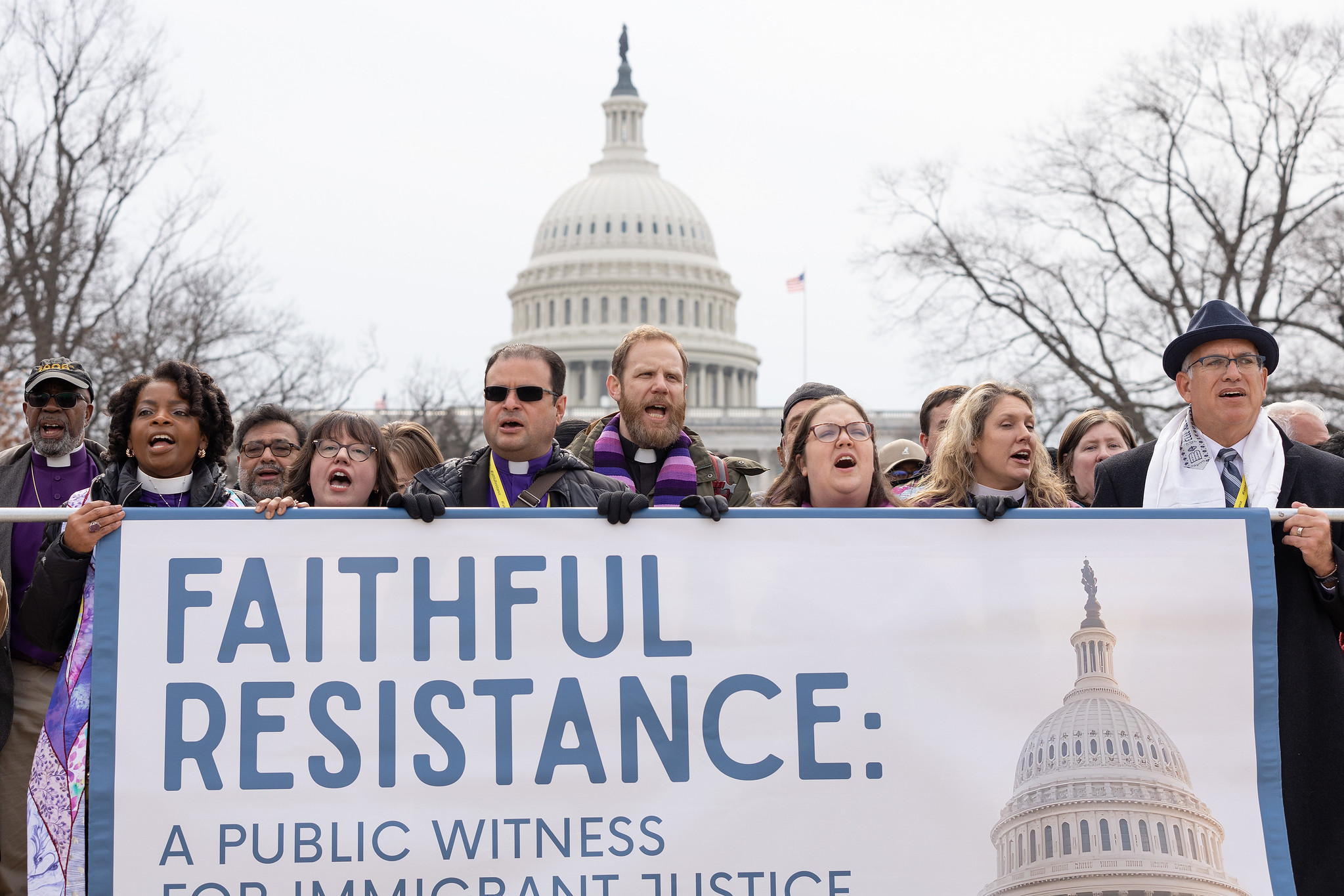
A busload of United Methodists from Western North Carolina traveled to the U.S. Capitol in February to raise their voices in faithful resistance. God calls us to welcome the stranger, they proclaimed alongside 2,000 fellow UMC leaders and interfaith allies through a day of peaceful marching, public witness, and visits with congressional leaders.
Galvanized by what they saw and heard in Washington, D.C., members of the Blue Ridge District returned home eager to channel their activist spirit into good works.
It didn’t take long to find an opportunity.
In June, N.C. lawmakers passed a budget provision that redirects millions of dollars from programs that provide low-income residents with free civil legal services. It was a major setback for Pisgah Legal Services, the primary provider of free immigration services west of Charlotte.
Justice for the foreigner
Through its Justice For All program, Pisgah Legal assists survivors of domestic violence and child abuse, represents unaccompanied minors in immigration court, and helps parents and business owners arrange powers of attorney in case of detention. The organization also helps with visas, work authorizations, and permanent residency requests.
Pisgah Legal received $1.9 million from the statewide program in 2025 (including Helene relief), of which $110,000 supported immigration-focused work.
Members of the Blue Ridge District set out to raise that portion. The group is making steady progress, thanks to support from organizations and individuals across the Conference, including the Foundation.
“This gave people a very tangible way to respond to a humanitarian issue,” said Rev. Travis Smith, a full-time local pastor serving the Acton and Oakley congregations in Asheville. “You can picture a lawyer sitting down with someone needing assistance and saying, ‘OK, here’s where to start.'”
A connection to the past
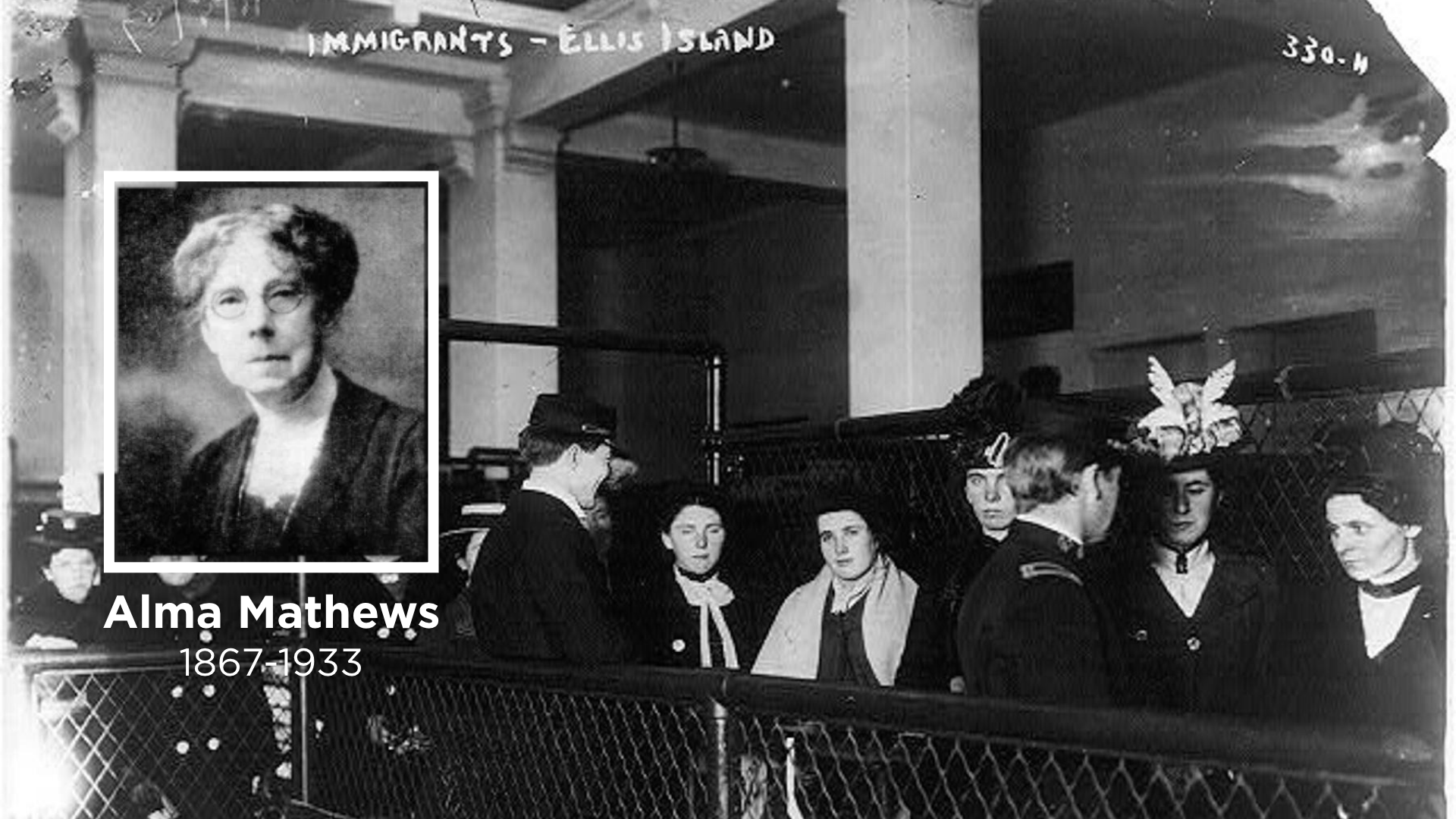
Advocates named their effort for a revered figure in Methodist history. Alma Mathews (1867-1933) greeted ships arriving in New York Harbor to help families and unaccompanied women navigate the immigration process. By the early 1900s, the ministry responded to more than 900 ships a year. Alma had a simple answer when asked about her work: I was just being kind.
“Something about her spirit resonates with so many of us in today’s America,” said Rev. Mark Ralls, superintendent of the Blue Ridge District. “She would be heartbroken to see what is happening…but hopeful as well. She would find hope in our deep desire to befriend our immigrant neighbors.”
Support for the Alma Mathews Fund fits well with the Foundation’s theme for 2026: Passion for the Possible. The staff found inspiration in Matthew 17:20: “If you have faith as small as a mustard seed, you can move mountains and nothing will be impossible for you.”
“This is a way to put our words into action,” said Foundation President David Snipes.

From activism to action
The Holy Spirit was at work on that chilly, overcast day in February. Forty-nine people from Western North Carolina joined in singing “We Are Marching in the Light of God,” as they walked past the United Methodist Building on their way to the Capitol. Pictured above is a group from Central UMC in Asheville.
“Once we arrived home, we knew we needed to act,” said Rev. Sandy Devoid, a local pastor appointed to the Leicester Circuit (Bell, Grace and Big Sandy). “Of course, we need immigration reform, but as a friend of mine says, ‘That ain’t coming now.’ Our immigrant neighbors locally need support.”
The undertaking has blossomed into a multi-faceted initiative called Do Good. Be Kind. Understand. It includes Nourishing Our Neighbors, a ministry providing culturally appropriate food for immigrant families afraid to leave their homes. Churches in the Blue Ridge District serve as collection hubs.
An educational component seeks to raise awareness of federal immigration policy. Workshops have welcomed nationally known speakers Rev. Dr. Alexia Salvatierra, a Lutheran pastor and academic dean of Centro Latino at Fuller Theological Seminary in California, and Dr. Phil Wingeier-Rayo, head of the Board of Higher Education & Ministry and former dean of Wesley Theological Seminary.
This is a local concern for many in the Conference. Late last year, U.S. immigration agents conducted a sweep called Operation Charlotte’s Web in the state’s largest city. More immigration enforcement operations should be expected, says Jim Barrett, retired executive director of Pisgah Legal and a longtime member of Central UMC in Asheville.
“It would be wise to be prepared,” he said.
The United Methodist Church’s Social Principles have long called for just, humane and comprehensive immigration policies that keep families together and honor the dignity of every person.
Like others who marched in February, Rev. John Boggs returned home inspired to work for change. The response over the past eight months shows the United Methodist Church at its best, says the retired clergyperson and co-chair of the Blue Ridge District’s Justice and Reconciliation Team.
“We need to fix what our government leaders are doing,” John said. “But at the same time, the Church can step up and fill the gap.”
Want to get involved?
Please click here to make a gift in support of Pisgah Legal. Note “Alma Matthews Fund” in the comment field. Checks can also be mailed to Pisgah Legal Services, P.O. Box 2276, Asheville, N.C. 28802.
Prayer, Compassion, Awareness: A Day of Solidarity with Immigrants
Sunday, Oct. 18 at 2 p.m. at Central United Methodist Church (6030 Albemarle Road, Charlotte)
Learn more here about this bilingual gathering to pray with and for immigrants while also educating non-immigrant neighbors.

Photo above courtesy of Rev. Sam Burleson
Foundation will host workshop for clergy, lay persons
The Foundation will host a workshop on Stewardship in the Black Church led by Rev. Melvin Amerson, a nationally recognized speaker and author of numerous books on faith and generosity.
From passion to purpose: How a team hears and values the wisdom of every voice
One person's professional development may not seem like a game changer. But Maggie Armstrong now has a set of practices she can infuse into the work of Disaster Ministries. Healthy communication means greater capacity to do God's work.
These students will enrich our churches and communities
These students are pursuing their dreams with support from scholarships managed and awarded by the Foundation.


